Spring
I took some photos of the first day of Spring in Edmonton, Alberta, Canada (March 22nd, 2013):

Really, springtime in Edmonton is more about a longing for green than anything, isn’t it?
On the first day of Spring we went to school by toboggan.


The snow plows celebrated the equinox by making lots of money.

Honestly though? It’s like this every year. We get spring flurries. And no matter, we are always surprised and can’t resist complaining/bragging about the ridiculousness of it. This is our “potting shed”. After a decade, I should know better than to store pots in it. Because when it’s time to start tomatoes, the pots are not handy.
Meanwhile at the hardware store….

Yeah huh.
Not tempted. We have a perfectly good patio set:


One foot in front of the other. A spring stroll…
And then what a difference a week makes:

Spring is a dramatic surge of melting.

And suddenly our winter jackets seem oppressive instead of essential. Did I mention these photos were taken ONE WEEK apart?


It’s all puddly and mucky.

No more snow plows… I don’t know what they do in the off-season?

I’m sure they have a better time of it than this vanquished snowman…

There aren’t any baby bunnies hopping through green grass here. It so doesn’t match the greeting cards and calendar photos.
But it’s Spring. And it’s amazing. And it feels good. Like we’ve accomplished something through hard work and determination.
Happy Spring from House of Flurfel!
I give it 5 stars

A House of Flurfel Cocktail:

One part youngberry juice…
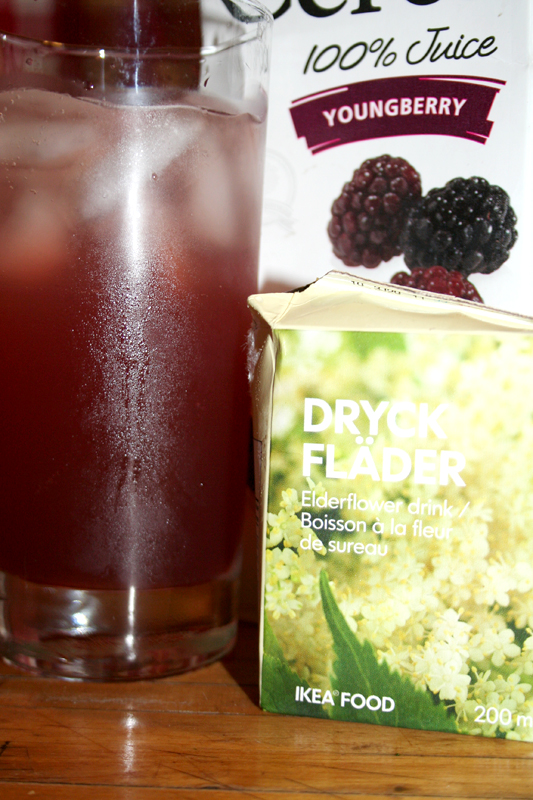
One part Dryck Fladder…
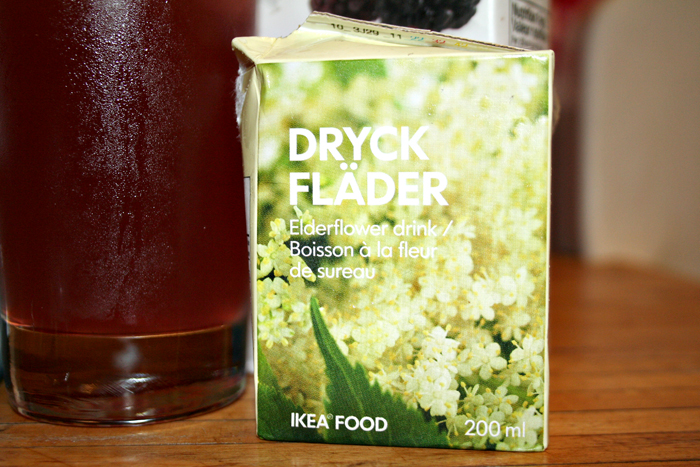
Which is, of course, Elderflower juice, available at the Ikea cafeteria…

Add gin.

Et voila. The Midlife Crises.
Elk Island National Park
We asked Brent what he wanted for Father’s day and he said “Camping, please.” We had a thing on Saturday and another thing on Sunday, so we could only go for 24 hours. I reserved a site at Elk Island National Park.
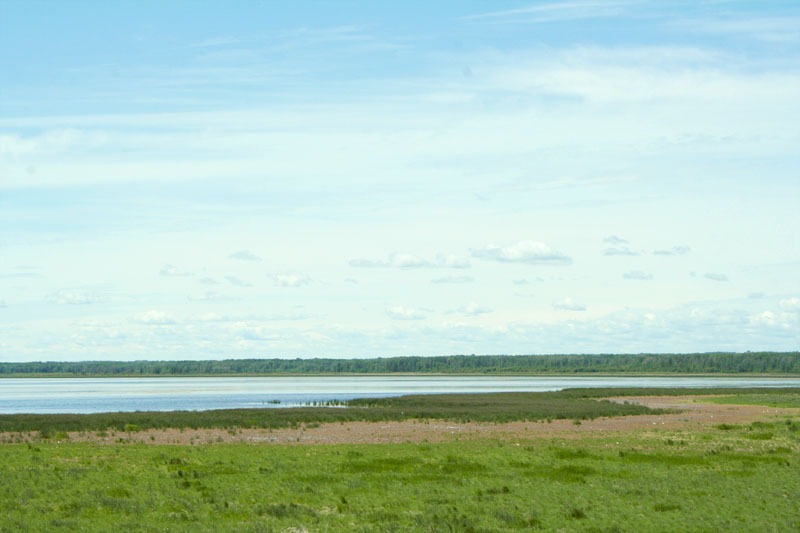
It’s less than an hour’s drive from our house in Edmonton, so a totally do-able quick trip and the perfect opportunity to test out our rig for the longer trips we’re planning this summer. Also, it’s gorgeous. It’s a Prairie Safari. The white flecks in this photo are nesting birds.

One of the big attractions is the Bison Loop road. From the safety of the Mothership we steered our car-seated kids through a herd of bison who had just finished calving. They complained all the way about how incredibly boring it is to be stuck in the van and then started shouting ecstatically about baby buffalo and proclaimed it THE BEST THING EVER.

This guy isn`t camera shy.
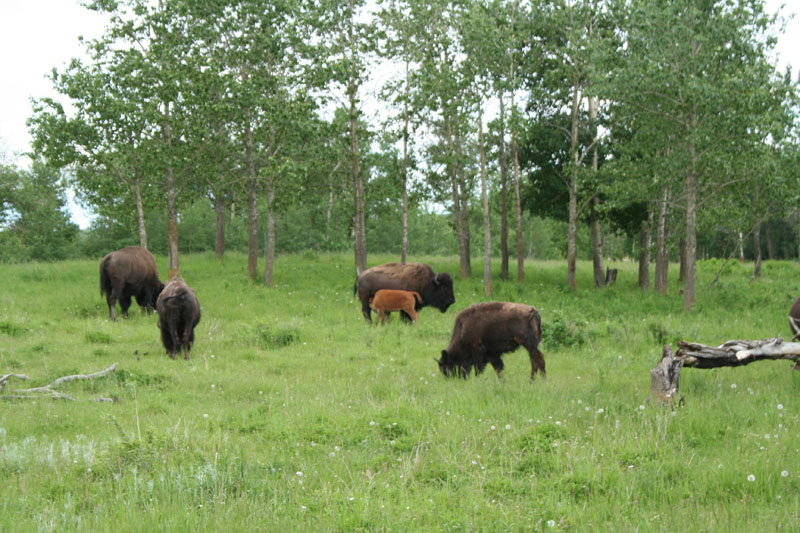
Oddly, the herd of bison do not stop munching on grass to deliver shocked and reproachful glares when a baby buffalo needs buffalo numnums.

A baby and a yearling.

This one’s horns are pointing in different directions.

There are plenty of stunning hikes to choose from. Some are all day epics and some are short and spectacular. We choose a few that were under 5K and made a day out of it. There is so much wildlife to see. We saw tons of ducks and geese and a muskrat on this boardwalk.
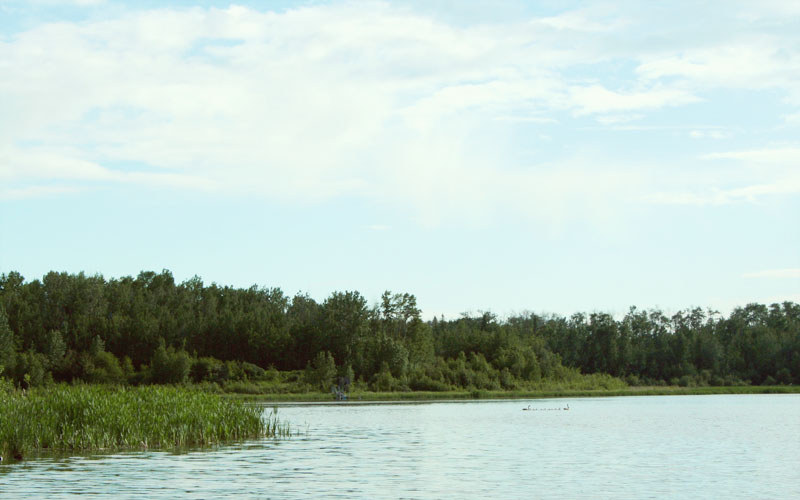
This is just a family of geese with 7 fluffy yellow goslings swimming across silvery Astotin Lake.

This is just a Canadian Tiger Swallowtail Butterfly drinking some nectar from a Wild Honeysuckle.
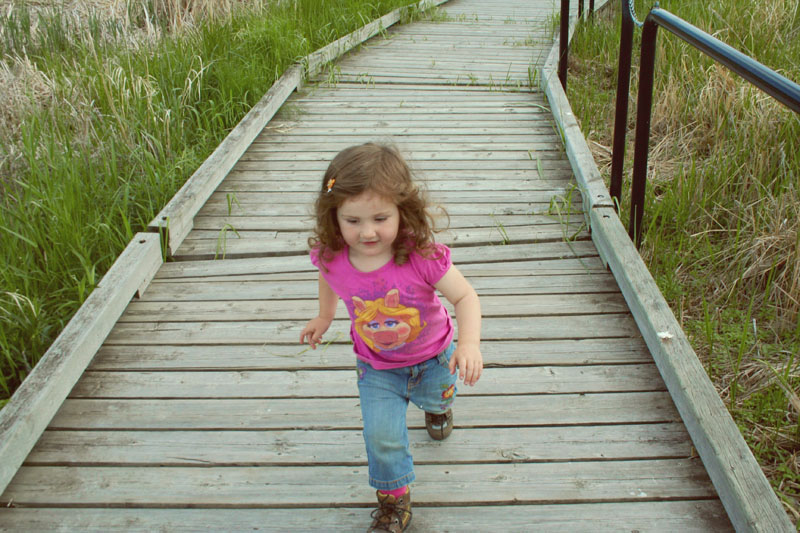
Our littlest hiker exploring the park.
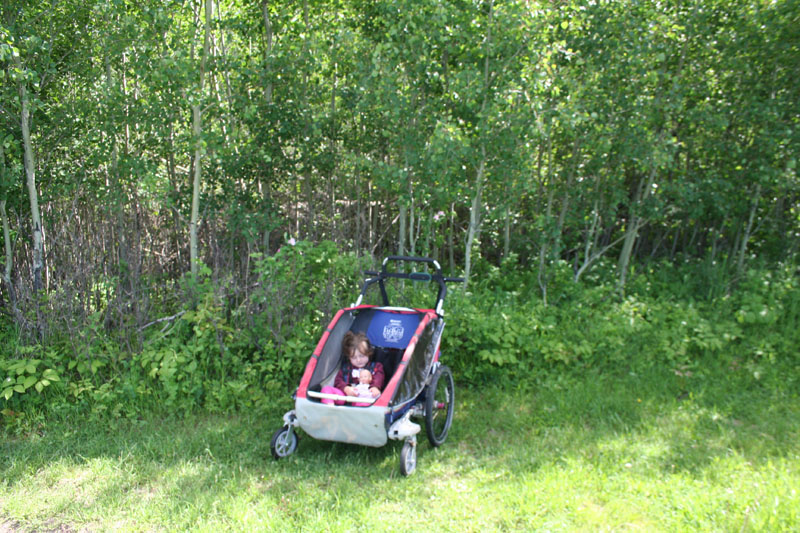
Our littlest hiker having a nap.

A good spot for a picnic.
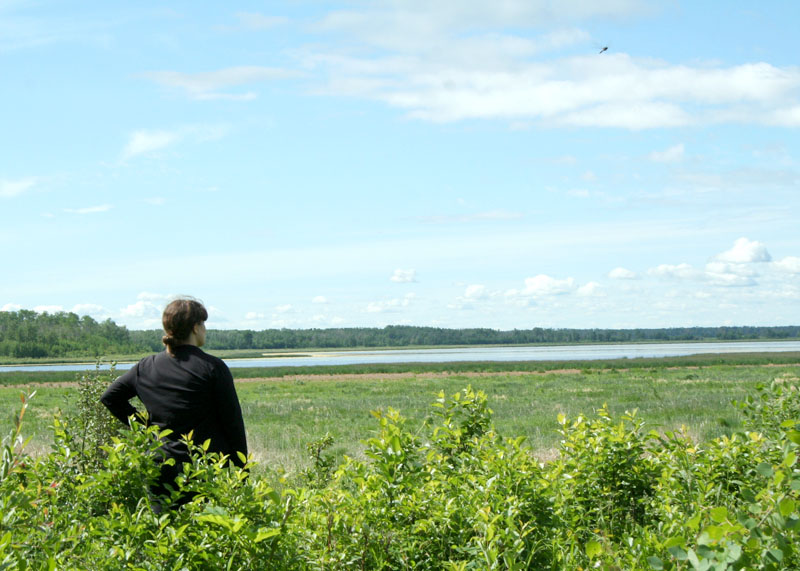
I like the dragonfly in this photo. See it? Top right corner.
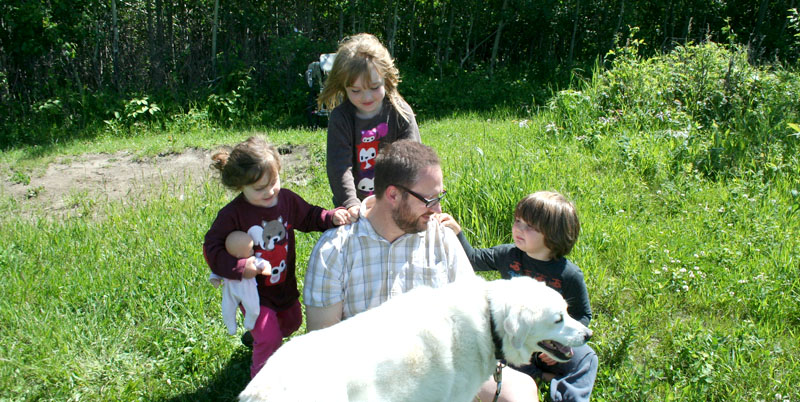
Happy Father’s day, Brent. You are so loved.
XOXO
Marlene, Hazel, Oliver, Josephine & Gus
Enough
If you’re online much, you probably haven’t missed this controversy:

The May 22 2012 Times cover went viral launching hundreds of TV and radio interviews, hundreds of thousands of blog posts, millions of online comments, and a gazillion titters, tweets and international tit fits.
It’s meant to be provocative, obviously. The idea is, of course, to sell lots of magazines by being bait “for pearl-clutchers and co-sleepers alike.” And it worked.
In the interests of full disclosure, I did trundle straight to a bookstore, with my double-chariot, as soon as this hit the fan, only to be politely explained to by the clerk that I was asking to buy a magazine from the future. “Come back in three weeks”, she said, “when the magazine is actually on store shelves.”
I did.
I slid it onto the counter feeling kind of blushy, like I was scoring a copy of “Juggs.” And the frumpish Chapter’s clerk did clutch at the place pearls would be if she was wearing any and did remark, “Ohmigoodness. I certainly hope that is, like, totally photoshopped because I just can’t believe any mother would like, do that to a child that old.”
And I said, “Well, it says here he’s only three, so… I doubt they’d have to photoshop that.”
And she said, “Really? Seriously? Okay. Ohmigod. Did you hear about the parents called helicopters? Because I heard there’s some parents called helicopters who even follow their children to university and give them books and stuff through the doors. Do you think that’s okay?”
Then I said that I didn’t even know that helicopters could have children, and it got kind of awkward while I was entering in my PIN.
In all the controversy, one thing is clear: everybody has an opinion on breastfeeding a preschooler who is standing on a chair, looking quizzically into the lens of a NY Times photographer’s camera, while his mother (who is a model in real life) sports skinny jeans and strikes a “you got a problem with this?” pose.
The lactivists like to point out that the World Health Organization promotes breastfeeding well past infancy and that breastfeeding a 3-year old is very normal in almost every other part of the world.
A lot of people point out that boobies make them feel funny, and that the thought of a 3-year old sucking on one makes them squeamy.
A lot of people accuse the woman on the cover of child abuse, sexual abuse, and/or simply ruining her child’s life because she can’t let go/has an insane desire for attention/ is not considering the real needs of her child who has obviously been tricked into thinking he still “needs” his mother in a mammalian sort of way.
He’s bound to become a serial killer, with that kind of parenting, the critics say.
Well your children are bound to be crack addicts if you don’t breastfeed them, say the defenders.
It’s all so dire.
Here’s what I say: Nursing a 3-year old is controversial only now, only here, at this strange point in time and space when it is suddenly “news” that has “gone viral” on the cover of the freakin’ NY Times. At no other time or in no other culture could a young mammal having a mammary snack be considered news at all, much less of the shocking variety. What would be considered shocking, people, anywhere or anytime else are the skinny jeans.
The extent to which breastfeeding has become de-normalized in our culture is extreme. Like, cover of the Times extreme.
Here are some billboards my three-year old boy saw this week while we were out and about in the city:



Just sayin’.
Now what really, really, really bothers me about this whole Times Cover fiasco is the straight up fact that everybody is a $%&*!# expert these days with a specialization in how to be a good mother and a PhD in what makes a mother bad. Except mothers, obviously. They are horridly uniformed. In fact, they aren’t even trying. Gawd. Watch an episode of Nanny 911, why don’t you, Moms. All you have to do is keep your child in constant terror of something called a “timeout mat” and they’ll grow up to be perfectly well-balanced, functional human beings. It’s not even hard.
I’ll tell you this:
In the first few hours after giving birth to my first child, a nurse at the hospital told me that my newborn was “all wound up” and asked if I, by any chance, had “ever relaxed at all” while I was pregnant, thus implying that I had failed at the mom game before even making it out of the hospital door.
I have been scowled at by an ultrasound technician because my fetus wasn’t at all behaving during my prenatal check-up.
I have been bawled at by a homeless man for not covering my baby’s face with a blanket while going for a stroller walk in the cold. (I wasn’t telling him how to do his job.)
The other day I took my 6-year old for a long walk in the sunshine and then to the bookstore. I thought we could use some special one-on-one time. Near the end of our stroll through Terwilliger Park I was throwing a stick for the dog while she was poking at some mud with a long branch. “This is nice,” I thought.
We were about 20 feet apart. A big puppy ran up to her and pushed her down into the mud. She cried and ran to me. I consoled her. Later, I thought, I’ll use this as a “teaching moment” and explain to her why she shouldn’t run away from dogs she’s afraid of.
The owner of the dog thought he’d use it as a “teaching moment” too. Not an opportunity to teach his dog not to jump up on people, mind you, but an opportunity to lecture me on what a shit mom I am.
“Yeah, AWESOME,” he shouted at me. “If you’re going to bring your kid to an off-leash park, keep them near you, maybe. Or better yet, don’t bring your kid here at all.” Then he muttered something nasty while walking away that I, and the 6-year old I was hugging, couldn’t quite make out.
I cleaned her up in the car with some wet wipes and then we went to the bookstore. As I was paying for the colouring book she picked out, she ducked under one of those tables laden with crappy impulse purchases and giggled while watching me look around for her in mock-horror. I told her to come out from there and then that, “You’ve got to stay where I can see you in the big stores.”
This prompted a loud guffaw from the woman behind me who asked me, loudly, if I’d ever watched Bubble-Wrapped Children on TV.
“Nope,” I conceeded.
“You should,” she declared, and went on to tell me the gist of it and how I was ruining my child completely by keeping her within arms reach of me at all times.
“You just need to be needed,” she told me.
Like I said, it’s all so dire and everybody is an expert ‘cept little old mom. She has to be told. She knows not what she does. Or why.
Doesn’t she even care how horribly she’s ruining her kids?
Now, there are some things I like about the Times article which is actually about Dr. Sears and attachment parenting and what the author calls “post-traumatic Sears disorder.” Kate Pickert suggests there’s just something about modern motherhood where the ladies can go all whack-a-doo following attachment parenting to the letter. I’ve noticed that myself and do NOT appreciate pseudo-scientific claims that I’ve caused “permanent developmental damage” to my babies by swaddling them or placing them in a stroller while going for a run or by leaving two behind with a sitter so I can spend time with just the one or any manner of other attachment parenting flavoured direness.
But there are some things I really don’t like about Pickert’s article, namely, her assumptions that breastfeeding is harder than not breastfeeding, that natural childbirth is about “proving something” and not about respecting the bodies, the experiences and the decisions of women, that the needs and wants of babies and children are always antithetical to those of their mothers, and that mothers must be duped somehow into wanting to stay home with their small children. I don’t buy any of that.
But what really, really, really bothers me is that “What’s wrong with mothers these days” is a snappy news item at all.
Honestly?
When did judging mothers and predicting the myriad ways in which they are ruining their children become a national sport? When did the mousy-bloused clerk at Chapter’s become an authority on the correct age to wean a child and also on helicopter reproduction? When did it become okay to heckle a mother in front of her child? When did re-educating mothers on television become passably good entertainment for the average Joe and Betty? When did “parenting” even become a verb anyway?
ENOUGH!
Seriously.
ENOUGH!
Spring Cleaning
I am a fan of spring cleaning. It just feels good. I think our Northern clime makes it even better for us. I think that because we survive one of the longest winters on the planet we experience the most rapturous spring cleaning in the world.
For 6 long months (at least), there just isn’t enough light to penetrate into the farthest nooks and crannies of our homes, and the light that does make it in is just too thin and non-committal to bother illuminating the grode that is busily accumulating while we scheme about flying to Mexico to join all the other Croc-sporting Canadians for una cervza, por favor.
When the light finally returns to thaw our decks and burn our shoulders, so much is revealed. I’m not talking about what you saw your neighbour mowing his lawn wearing, save it for your therapist. I’m talking about the filth in every room of our homes. And the clutter, Oh! The clutter! And all the crap in our yards that, months ago, looked so pure and clean blanketed in snow with chickadees flitting through the bare branches of our trees.
Goodness.
It’s just so awesome to muscle a broom, a wet rag, and a Goodwill donation bin at all the crap, grime, gunk, scuz, dust and amassment. It’s just so satisfying to make it all gleam in the lemony sunshine.
This year, we went a step cleaner than last. For years I’ve been meaning to switch to homemade, non-toxic cleaning products. I want to run an ecological household. And I want my army of munchkins to help with the spring cleaning without Mr. Clean and Windex seeping into their wee helping hands. But I didn’t bother before. I don’t know why. This year, though, I did. I just stopped restocking store-bought cleaners. Then I printed off these recipes:

Then I stocked up on soap granules and castile soap, washing soda, white vinegar and borax. I already had olive oil and essential oils of lavender, grapefruit and bergamot. I bought some dollar store spray bottles and collected some containers to re-use like milk-jugs to store large batches of solutions in and laundry soap containers for laundry soap. Then I just made the recipes as needed and put a little elbow grease into cleaning with them. They work! The ingredients are easy to find at Earth’s General or the aisles of Superstore.
The all-purpose spray and the stainless steel polish are my favourites. I love how nice the spray smells and how handy it is to have something on hand that cleans without poisoning. And the stainless steal cleaner — which is more a method than a recipe: put some olive oil on one side of your rag and wipe away the smudges, then put some vinegar on the other side of your rag and make it brilliant — is hugely better than store-bought.
The laundry soap and the dishwashing powder (all purpose scour) are the big money savers. Wow. We do a lot of dishes and a lot of laundry and would probably spend about $40 a month on these products. This month I estimate we spent less than $5. And I’ve got jars of homemade laundry soap (that smells like lavendar!) left. Do these products work? Absolutely.
I like how much money we’re saving, I like how much safer they are for my home/children/planet, and I like how it helps us shrink our ecological footprints.
The recipes are from the David Suzuki Foundation’s website where there’s lots of other resources.
Try it — if you’re any where near as cheap and dirty as us, you’ll love greening your spring cleaning.
So nailed.

The Lifted & The Lorax
The Lorax movie hit theaters at the beginning of March just a few days after the University of Alberta bestowed an honorary law degree on Peter Brabeck-Letmathe, the Chair of Nestle.
If you haven’t read Dr. Suess’ The Lorax, please go directly to your nearest library/bookstore/my house to get a copy and read it to some kids. If you don’t have kids, you can use mine. They love it.

The Lorax is a little fluffy man who pops out of the stump of a truffula tree to object to the chopping down of it.
“I am the Lorax and I speak for the trees,” he begins.
He’s sort of like David Suzuki, but magical and Seussical.
The Lorax is talking to The Oncler, an industrialist who arrives in a beautiful forest of Trufulla trees, replete with “the song of the Swomee-Swans,” ringing out in “mile after mile (of) fresh morning breeze.”

The forest is populated by “Brown Bar-ba-loots frisking about in their Bar-ba-loot suits as they played in the shade and ate Truffula Fruits.”

The Onceler has chopped down the tree to produce a “thneed,” which he manufactures from the “bright-colored tufts of the Trufula Trees.”
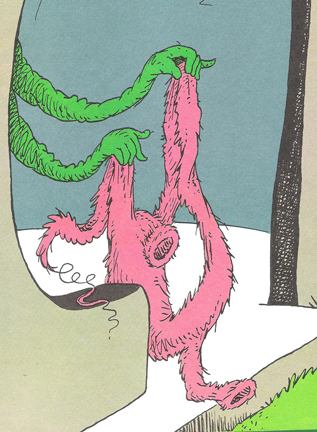
The Lorax warns the Onceler not to chop down any more of the trees, but alas, the Onceler is turning a tidy profit from the sale of thneeds.
“A Thneed’s a Fine-Something-That-All-People-Need! It’s a shirt. It’s a sock. It’s a glove. It’s a hat. But it has other uses. Yes, far beyond that. You can use it for carpets. For pillows! For sheets! Or curtains! Or covers for bicycle seats!”
Instead of heeding the Lorax’s increasingly desperate warnings, the Onceler “biggers” his factory. And “biggers” his loads. He “biggers” his wagons and “biggers” his loads.
Meanwhile, the barbaloots have to leave the forest because there is no food left for them, the Swomee-Swans must exodus the skies choked with “smogulous smoke!” And the poor Humming-Fish have to leave their pond which is all “glumped” with “Gluppity-Glupp” and “Also Schloppity-Schlopp.” “For thier gills are all gummed… oh, their future is dreary. They’ll walk on their fins and get woefully weary in search of some water that isn’t so smeary.”
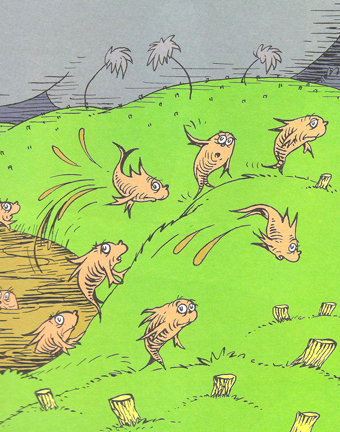
The Onceler keeps biggering and biggering until with a “sickening smack” the last Trufulla Tree falls with a whack. Nothing is left in the landscape except the Onceler shut away in his crumbling factory.

It’s a children’s story and the plot lays out the simple and obvious consequences of madly consuming resources without a nod or a think about what we’re taking fron the Earth.

The Lorax movie updates the plotline a bit and sets the story in the present. The protagonist is a boy who lives in “Thneedville” (a walled, plastic dystopia) who tracks down the long since hermitted Oncler in his barren, blackened, post-industrial wasteland for the last truffula seed so that he can grow a tree (which he’s never heard of before) to impress a girl.
The villian is this guy:

He’s owns a mega-corp that sells bottled air to Thneedvillians. The film includes some privacy issues (the mega-corp has cameras everywhere and sends thugs to stop the boy from leaving the walled city and from planting the Trufulla seed) and goes a bit farther in setting this guy up as an extreme mega-post-Oncler-industrialist by explaining how he’s doing something worse than just plundering resources to sell thneeds, he’s commodifying something that is and must necessarily be free and accessible to all living person, all living plants and all living animals: air.
The great part, according to Aloysius O’Hare of O’Hare’s Air and his thugs, is that the more air the corporation bottles, the worse the air quality gets, so the more air people need to buy, and so on, and so on. Get it? Of course you do. It’s a children’s movie and my 3-year old gets it too.
Now. Nestle. Nestle is the world’s largest bottled water corporation and a Goliath food and water corporation. Nestle has a sordid history of getting breastfed babies to give formula a try which, in some third world countries (where water quality is an issue) can literally kill those babies. If the formula thing doesn’t work out for them (say because of water quality issues or a lack of money to buy formula once their free samples have run out) those babies can’t go back to the breast because they don’t know how to nurse (it’s learned) and their mothers will stop making milk as soon as their baby stops drinking it. If that happens, those babies starve. The World Health Organization has made many attempts to get Nestle to stop flogging formula in ways that might harm or kill babies. But Nestle has been accused many times since of flouting the WHO’s prohibitions about advertising and promoting formula in third world countries.
Infants are extremely vulnerable — you don’t need an honorary law degree to know that — and to endanger them for profit is simply unforgivable. Most people would struggle to think of a more egregious example of corporate greed and for that reason, University of Alberta textbooks cite Nestle’s marketing of formula in third world countries as, literally, a textbook example of an ethically problematic corporation, or, in words my three-year old might get, a really, really, really bad company, like, killing babies bad.
According to Nestles’ website, they learned a great deal from their “experience concerning infant formula marketing in Africa” and are ready to move on, “recognising our responsibility to go beyond what were accepted marketing standards at the time.” It boggles my mind that Nestle has, after causing an unfathomably uncountable number of infants deaths been able to bigger their factories and bigger their roads, bigger their money and bigger their loads.
But bigger they have! Nestle is crazily busy polluting our water supply to fill plastic bottles up with Nestle brand water and shipping them around the planet for sale. The more bottled water we drink, the worse our water (and air) quality gets, and so on and so on.
Nestle’s fabulous business model is just like O’Hare’s Air — it creates new and fantastically profitable markets by commodifying things that were previously free (like milk for baby mammals or water) and then sells those commodities to us. The manufacture of the products increases the demand for them by severing the natural supply (destroying breastfeeding practices or polluting drinking water).
But I don’t have to go on, you get it, of course you do. It’s like the plot of a children’s movie about how an evil corporation is destroying the world.
So why is the University of Alberta awarding the chair of Nestle with an honorary degree for his efforts in water conservation?
It’s baffling. And not just to me.
Here’s a list of 70 organization from 20 countries who are condemn the Brabeck-Letmathe honorary degree.
The University of Alberta’s president, Indira Samarasekera, insists that the degree is not for Nestle, it’s for Brabeck-Letmathe as an intellectual. His intellectual position is that to “bang on about declaring water a public right… mean(ing) that as a human being you should have a right to water. That’s an extreme solution.” Brabeck-Letmathe prefers the position that water is a foodstuff like any other foodstuff it should have a market value.”
In other words, Nestle should get a cut, or at least a shot at a cut, of every human’s basic need for water. It doesn’t sound very intellectual to me. It sounds like part of a very real bid for total control over Earth’s most vital resource.
I, for one, am deeply embarrassed of my alma mater, The University of Alberta, and the entire province of Alberta over this whole debacle.
One thing I love about Dr. Seuss’ the Lorax is that it provides some great terms and images to explain to my small children why I can’t/won’t buy them every thneed that catches their eye. And they get it. It’s not facile, but it is simple.
We’re all Barbaloots, people, frisking around in our Barbaloot suits. And if corporations like Nestle fill our water systems with gluppity-glup we will have nothing left to eat and drink.
Motherworkin’ Part II – Interruptibility
If I had to even begin to conjecture how many times I was interrupted while writing this blog post about how interruptible a person becomes the moment she turns into a mother, my head would fall off, it would roll out the front door and down the sidewalk, it would melt into a radioactive ooze that would almost certainly react with the trail of Cheerios and raisins my children left between my minivan and my front door to launch an alternate universe in which evil robots would set into motion an awful plan to enslave humanity and accelerate global warming.
So.
I just won’t even get started on that.
Let’s suffice it to say, I started this blog post in June and now it is February. I suppose I could have forced myself to be a bit more single-minded about it — that is how, in my experience, one gets things done. But I’m not single-minded. I used to be. Now I am a mom.
This is how this post started in June:
There’s only a handful of things I know for sure about mothering. One of them is that you’re never the only one — some other mother somewhere feels just the same. Another thing I know is that no two mothers will ever have the same experience and so you can’t ever assume that your experience is at all universal.
It’s hard to quantify the work of mothering because the real nitty-gritty of it is different for different people. But I know I’m not the only one afflicted with interruptibility.
Many of the torments that new parents suffer are perfectly obvious and quite universal — there is the sleep deprivation, the stress of your emotional and financial responsibilities increasing exponentially, the anxiety of being screamed at and barfed on, and the drudge work of diapering, feeding and transporting an infant in a plastic bucket that looks like it should weigh 2 pounds but actually weighs 30 and has a three-point harness system that requires at least five hands to operate. All that work is hard, sure, but for me, most of the time, it’s not the hard part.
The hard part is more nebulous, duller, and excruciating. Interruptibility has a lot to do with the hard part. I wish I knew the term years ago — I wish it was in that plastic bag they give you at the hospital with Pampers samples and Nestle coupons — because for me, just having a word for it is a tall glass of water and a month of sleeping in on Sundays.
The term interruptibility came to me via Ariel Gore who arrived at it via Adrienne Rich who got it, according to Oprah, from Tillie Olson:
“More than in any other human relationship, overwhelmingly more, motherhood means being instantly interruptible, responsive, responsible.” (Tillie Olson)
What this means is that when you’re caring for an infant, you can get completely lost in caring for an infant, but you can’t get lost in any other type of work or leisure or relationship or anything else at all. You can try, but you’ll probably be interrupted 30 seconds, or a minute, or five minutes, or sweet glory! an hour! into it. This doesn’t sound so bad, I know, and for some people, it seems to be not that big a deal. But for others, artists and writers particularly I think, who need to disappear into a painting or a story or a what-have you, it’s a special kind of torment.
It’s like trying to read with somebody asking “Whacha’ reading?” every other page, or paragraph, or word. But it’s not just your feet-up-with-a-book time that gets interrupted — it’s all your time. Your sleep – interruptible. Your meals — interruptible. Your conversations — interruptible. Your relationships — interruptible. Your work — interruptible. Your very thoughts — interruptible. This is an exhausting and socially isolating part of motherhood.
It’s difficult to even describe what it feels like to always have to shush somebody back to sleep or change a diaper or to rescue someone from the cabinetry if every time you open your mouth to start a sentence about what that’s like, you have to shush somebody back to sleep or change a diaper or rescue someone from the cabinetry.

People looking forward to a parental leave for the first time (or, thanks to the marvels of momnesia, even a second or third time) often picture vast swaths of time (a whole year of “not working”!) in which they will write a novel, get their home and garden looking just like in the magazines, finish up a degree, or start a lucrative home-based business or two. Why not learn Mandarin?
One imagines turning to a fussy baby and explaining, “Mommy is busy getting a PhD just now. You sit tight and I’ll help you with your catastrophe/crises/tedium/nuisance/ordeal/grief and/or predicament in five.” And the baby nods and smiles and politely waits because you have taught the baby to do this. It’s because you are a smart and conscientious parent.
I imagined gardening while my firstborn happily entertained herself on a nearby sunshine-dappled blanket. Butterflies would gently flit past her while she beheld those marvels of nature in rapt delight. If she grew fussy, I would simply glance at her in a motherly way that I would certainly acquire as soon as I became a mom, and she would be calmed.
It was more of a:
“Why aren’t you paying attention to me? I like it when you hold me and make me laugh.”
“I’ve been doing nothing but holding you and making you laugh for hours. My back hurts. My brain hurts. Can I please just do this for five minutes? I need to get something done.”
“Let me eat the thing you are holding or I will cry. My teeth are mildly uncomfortable.”
“No, It’s a dirty shovel, you shouldn’t put it in your mouth. And I can’t dig up this soil while holding you.”
“Then I will make this experience terrible for you until you do hold me.”
“Well played, Baby. Well played.”
Highly effective people, people used to running marathons and getting law degrees inevitably find themselves baffled by the fact that it suddenly takes them over an hour to make a pot of spaghetti. And by the time they get it on a plate it’s cold. And by the time they get it from their fork to their mouth, it’s even colder. A new mom once told me in tears that her only goal of the day was to bring a pre-made meal up from the freezer and plunk it in the crockpot — and she didn’t get to it. They ordered in.
“So what, exactly,” a very intelligent and very pregnant mom-to-be once asked me, “are you so busy doing?”
I, and a group of other experienced moms, were cautioning another expecting mom in our group that she “might not” get her PhD done during her mat leave.
“I don’t know,” was all I could muster. “You’re just… busy. It’s like, you can do whatever you want, but you might have to do it in 5 minute increments.”
After being through it 3 times, it’s still difficult to understand and nearly impossible to describe. I think we lack the right vocabulary to describe the work of mothering.
You are busy being interrupted. You are busy responding. It’s not that you’re not doing anything, it’s that you aren’t getting anything done. And it’s hard. It’s really hard.
In Ariel Gore’s book, “Bluebird,” she talks about “optimal flow” which is a state of mind one enters by getting lost in your work. It can be any work — writing, folding laundry, building something. Optimal flow is vitally important to a person’s sense of well-being, she says. If we don’t experience it, we don’t feel good. It’s why work therapy works. Optimal flow, she insists, is the thing that mothers of young children are so direly missing without being able to put their finger on it.
We all know parenting is hard work, but we also know it’s not the same as work. Mothering does not mean the same thing that working does. That’s why we describe a stay-at-home mom as “not working right now” and we ask people on parental leave about “going back to work.” We say that we need to find a work-family balance, and we know what that means, because when we say work we don’t mean parenting. By work we mean something that pays money. By work we mean something that gets done. Parenting is something that you don’t finish, like you finish building a house or writing a play. It is something that will always demand you to be responsive in some way or another. Gore insists that she can always tell who, in the writing classes she teaches, are parents. “They are the ones who leave their cell phones on.”
If you are afflicted with small children, I recommend respecting your need to get something done and to take time for yourself, no matter how absurd it seems. Last summer I hired a babysitter to take my kids to the park while I cleaned my house.
“Wouldn’t most mothers prefer to go the park while somebody cleaned their house?” a friend asked me. She had school-aged kids, she worked full-time and she really craved some time in the sun with them. She was busy and needed time to unwind and “do nothing.” I did not crave time in the sun with my children to “do nothing.” I craved just getting something done.
When your children are able to entertain themselves, this interruptibilliousness gets better. When your children sleep through the night, it gets better. When your children can feed themselves and use the bathroom by themselves, it gets easier. It gets easier so incrementally you might not even notice it. And then, of course, there comes a time, when you wonder why your kids don’t bug you any more and you wish they would.
Sigh.
Motherworkin’.
Bringing Down the House
One pleasure of having a pile of small and vigorous children, according to moi, is creating new family traditions.
New tradition is an oxymoron, yeah, but some of the things we’ve started doing only a few years ago we’ve been doing for lifetimes from our kids’ points of view.
I like being Santa Claus and Easter Bunny. I like dollarstore decorations and holiday-themed crafts. You can make a little magic or you can default with some “let’s not bother”. Either way, when holidays roll around, you are making traditions.
To me, it’s rewarding to go the “let’s make a fuss” route. Shining faces, hopeful whispers, shared memories: Oliver shouting, “OH. MY. GOD! How did LANTA know I’d like MODELLING CLAY IN MY LOCKING?! Whaaaaaaaaaaaaaat? CHOCOLATE? How did HIM know I’d like chocolate?”
As much as children thrive on repition and ritual, they sure take to an occasion. Especially ones involving things they aren’t ordinarily allowed to touch or do — like lighting candles or smashing things.
That’s why a favourite new tradition of ours is the smashing of the Gingerbread House. If you are wondering what to do with your gingerbread house or how to store your gingerbread house, Do try this at home:
Bringing Down the House from Marlene Flurfel on Vimeo.
Gus fact: Gus loves gingerbread. He snorfels up a lot of food items from the floor but few with the relish of gingerbread. The aroma of gingerbread baking in the oven makes him positively attentive. Undoubtably this has something to do with children loving to make and decorate gingerbread much more than they like eating it. The snorfling of floor-gingerbread is one of Gus’ favourite New Year’s traditions.
 House of Flurfel